Boundary Issues: Zoning and the Geography of Mobile Homes
Working Paper, December 2025
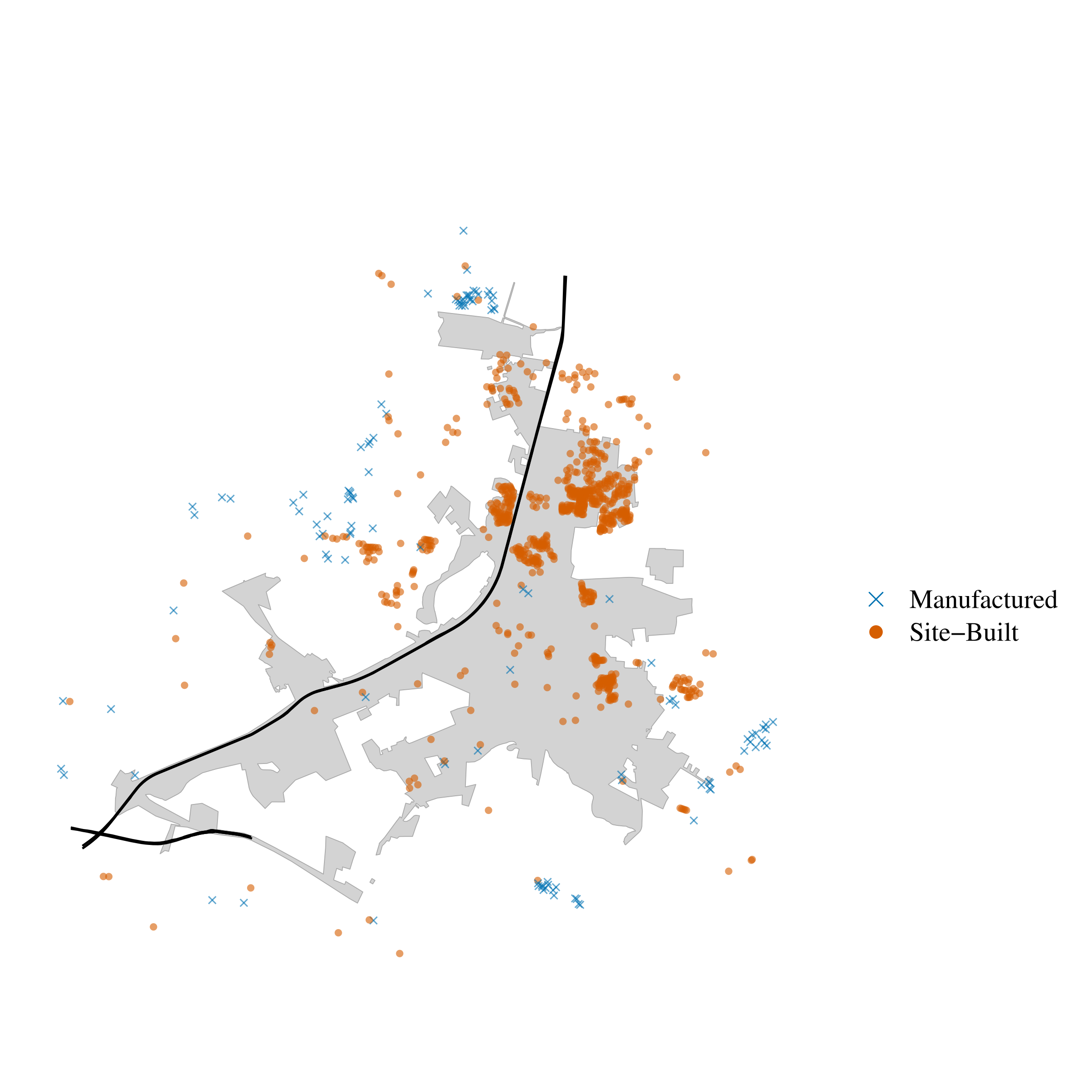
I present a novel stylized fact about the geography of mobile homes: their prevalence doubles at municipal boundaries relative to site-built homes. This pattern is widespread across the U.S. and cannot be explained by changes in demographics or other observable characteristics. I argue that the discontinuity is driven by municipal zoning regulations which impose differential costs on mobile homes. I test this theory with a boundary regression discontinuity design, quantifying the impact of municipal regulations on mobile home shares and prices. Using my RDD estimates, I then calibrate a CES model of housing demand. I find that the average municipality imposes an implicit tax on mobile homes of roughly 10%. However, the welfare effects are muted because similar site-built homes are close substitutes.
State Law, Local Finances, and Housing Markets: The Uneven Effects of Flat Fees
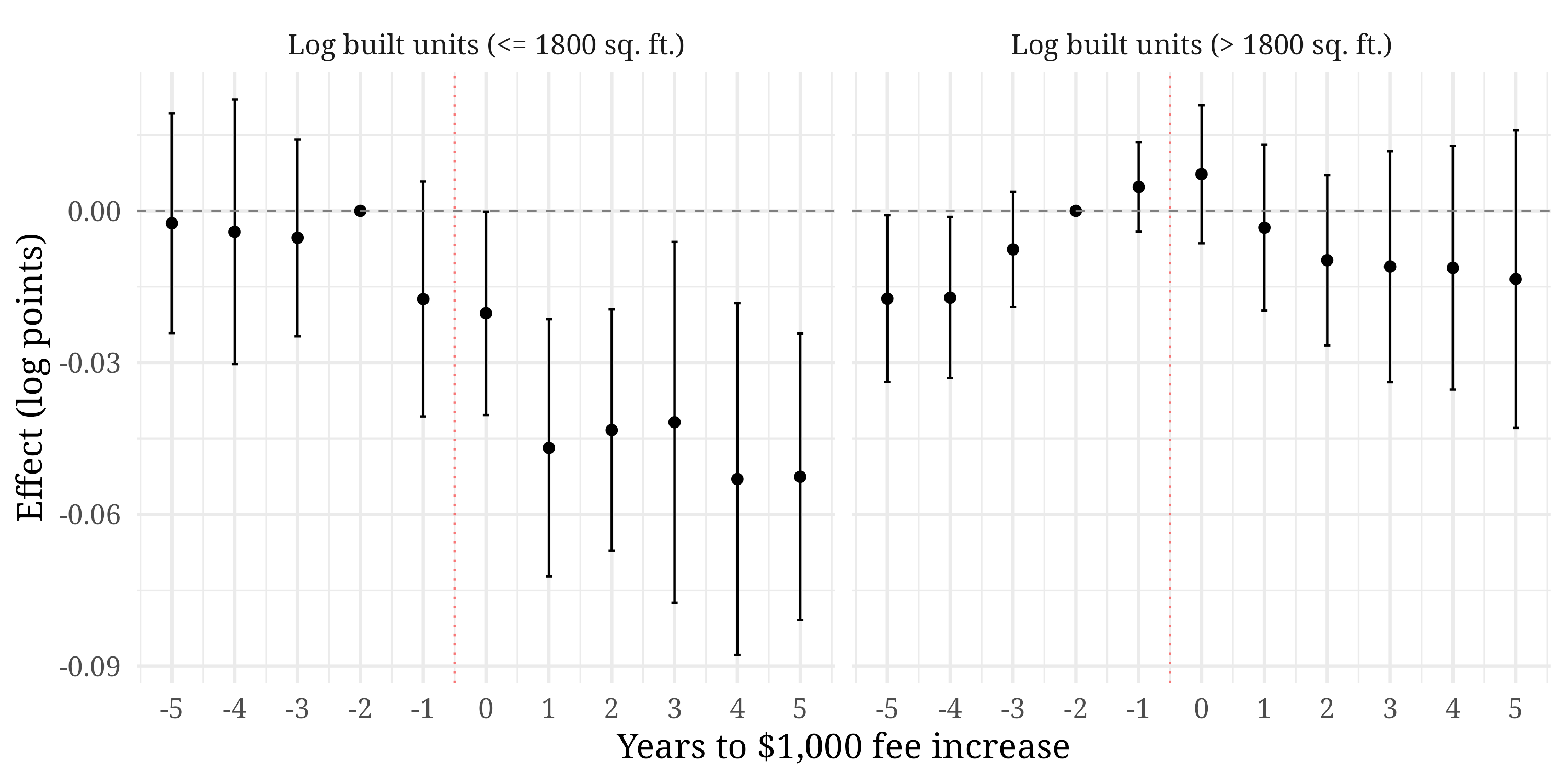
The average size of new single-family homes grew by over 40% between 1985 and 2014. I argue that this trend is explained by land use regulations which act as fixed costs for developers. Because small homes are relatively less profitable, increasing regulation differentially affects the development decision, increasing the average size of the remaining projects. Using variation in fixed costs from development impact fees, I confirm these predictions and find that fees alone can explain roughly 15% of the increase in average sizes over the period.
When Can Government Regulate Itself? Tax Earmarks and the Composition of Government Spending
Working Paper, June 2025
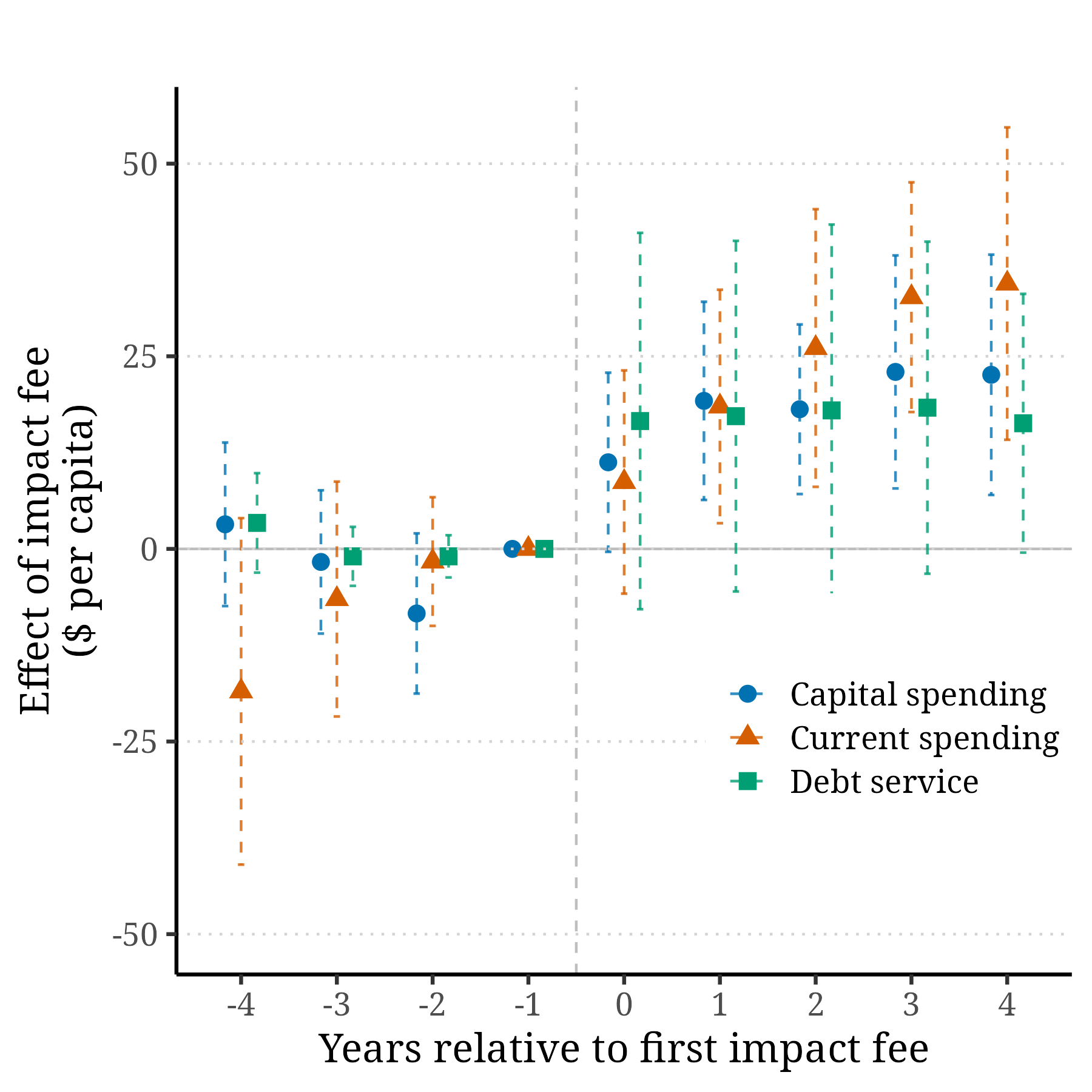
States impose earmarking requirements on local governments that restrict how revenue from certain taxes can be spent. I show that such earmarks are highly effective at raising spending on the designated category even when earmarked revenues are small, violating standard models of government and voter behavior that assume tax revenues are fungible. I argue that bargaining between government agencies is responsible for the effectiveness of earmarks. In support of this theory, I show that earmarks have the largest effects in large, county governments with greater scope for conflict between interest groups.
Retailer Congestion and The Timing of Transfer Payments
We use granular geolocation data and multiple empirical strategies to document that congestion is a pervasive feature of brick-and-mortar retail. Retailers do not adjust prices to reduce congestion. Instead, they invest in extra capacity in order to meet demand during the busiest periods, furthering urban sprawl.
 Boundary Issues: Zoning and the Geography of Mobile Homes